Pipeline construction is one of the most complex and challenging operations in the oil and gas industry. From welding to lowering heavy pipes into trenches, every step demands accuracy and safety. Among the many tools used in this process, the pipe lowering cradle often goes unnoticed—but it plays a vital role. By securely holding and guiding pipes during lowering, it prevents injuries, protects coatings, and minimizes delays. Without reliable cradles, pipeline projects risk equipment damage, leaks, and even accidents. This blog explores everything you need to know about pipe lowering cradles: their purpose, design, types, applications, maintenance, and why they are essential for safe and efficient pipeline installation.
What is a Pipe Lowering Cradle?
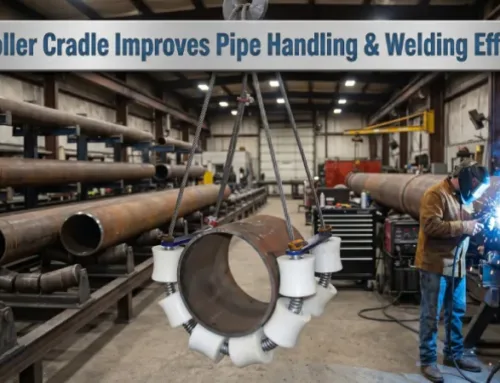
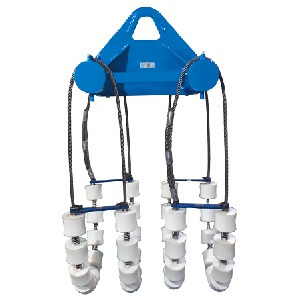
A pipe lowering cradle is a mechanical device used to support and guide pipelines during lowering operations. After pipes are welded above the trench, they need to be lowered smoothly without damaging their coatings or causing misalignment. Cradles provide the solution by securing pipes with rollers and supports, distributing the load evenly, and working seamlessly with cranes or rigging systems.
Basic Components:
- Saddle/Supports – Cushions the pipe and ensures balance.
- Rollers/Slides – Allow smooth, controlled pipe movement during lowering.
- Locking Pins/Grippers – Secure the pipe in position.
- Lifting Lugs – Attach to cranes, chains, or slings.
- Leveling Feet – Keep the cradle stable and aligned.
By combining these components, the cradle integrates effectively with crane systems, ensuring precision and safety.
Types of Pipe Lowering Cradles
- Rigid Fixed Cradles
- Designed for specific pipe sizes with strong, immovable supports.
- Adjustable Cradles
- Height and angle can be adjusted to fit different diameters.
- Modular/Multipoint Cradles
- Allow rapid setup for larger projects with multiple joints.
- Contoured Saddles vs. U- or V-Shaped Supports
- Contoured saddles offer maximum surface contact, while U- and V-shaped supports are simpler and versatile.
- Offshore/Underwater-Compatible Designs
- Made with corrosion-resistant materials like stainless steel and alloys for harsh environments.
- Quick-Release/Quick-Attach Variants
- Ideal for fast-paced projects needing frequent adjustments.
Design and Selection Considerations
When choosing a pipe lowering cradle, several factors must be considered:
- Pipe Diameter & Weight – Must match the cradle’s rated capacity.
- Material Selection – Steel, alloy, or stainless steel for durability; coatings for corrosion resistance.
- Load Distribution – Rollers are designed to spread pressure evenly to avoid deformation.
- Safety Factors & Code Compliance – Must adhere to international safety standards.
- Crane Compatibility – Should fit existing rigging and lifting systems.
- Environmental Conditions – Dust, mud, salt spray, or temperature extremes all impact cradle performance.
Why Pipe Lowering Cradles Matter in Fieldwork
Pipeline projects vary widely, and cradles adapt to each scenario:
- Onshore Installation – Adjustable cradles simplify trench lowering in rough terrains.
- Offshore Platforms – Corrosion-resistant cradles survive harsh marine conditions.
- Trenchless Pipelines – Work with boring machines for smooth placement.
- Above-Ground Installs – Provide stability during lifting and placement.
Common Challenges Without Proper Cradles
- Bobbing or Misalignment – Pipes swing during lowering, causing delays.
- Bending Loads – Pipes deform under uneven weight distribution.
- Slip Hazards – Lack of grip can damage coatings.
- Crane Coordination Issues – Without cradles, alignment becomes difficult, risking accidents.
Consequences of Poor Cradle Design
- Equipment damage
- Leaks in welded joints
- Worker injuries
- Costly project delays
Applications of Pipe Lowering Cradles
- Oil & Gas Pipelines – Safely lowers welded pipes into trenches, ensuring smooth installation without coating damage.
- Offshore Platforms – Corrosion-resistant cradles handle pipelines in harsh marine environments with reliability.
- Trenchless Pipeline Construction – Integrates with boring machines for precise lowering in underground installations.
- Water Distribution Projects – Provides stable handling for large-diameter pipes in municipal supply networks.
- Sewer and Wastewater Systems – Ensures controlled lowering of heavy pipes in treatment facilities.
- Industrial Plants – Used for transporting and installing process pipelines in refineries and chemical plants.
- Power Plants – Supports pipeline alignment for cooling water and steam distribution systems.
- Construction Projects – Ideal for handling heavy pipelines in civil and infrastructure works.
- Mining Operations – Helps lower slurry and drainage pipelines safely in rugged environments.
- Global Pipeline Projects – Trusted worldwide for strength, safety, and efficiency in critical installations.
Maintenance, Inspection, and Longevity
A pipe lowering cradle must be properly maintained for reliable service:
Daily/Pre-Shift Inspection
- Check rollers for wear.
- Inspect pins, lugs, and chains.
- Ensure no corrosion or deformation.
Scheduled Maintenance
- Lubricate moving parts.
- Replace worn rollers and pins.
- Reapply coatings for corrosion protection.
Storage Best Practices
- Keep in dry areas.
- Avoid stacking heavy items on top.
- Regularly rotate stored units to prevent deformation.
Why Choose SPM Equipment?
When it comes to safe and efficient pipeline construction, choosing the right pipe lowering cradles manufacturer and exporter makes all the difference. SPM Equipment stands as a global leader in designing, manufacturing, and supplying pipe lowering cradles built for precision and durability. Available in standard sizes starting from 6 inches and above, these cradles are engineered for inline travel operations to smoothly lower welded pipelines into excavated trenches. Each cradle is designed with robust materials and advanced engineering to ensure safety, efficiency, and long service life in demanding environments.
Customers can choose between nylon and polyurethane rollers, with polyurethane offering superior protection to external pipe coatings during handling, reducing the risk of scratches, dents, or coating damage. This makes SPM Equipment’s cradles highly reliable for critical pipeline projects. As a trusted name for pipe lowering cradles in India and abroad, SPM Equipment exports to various countries, including Russia, the USA, UAE, Australia, Malaysia, France, Kuwait, and Saudi Arabia, and worldwide. With proven strength, innovative designs, and global recognition, SPM Equipment delivers outstanding solutions for pipe lowering cradles for the oil and gas industry, ensuring projects are completed safely, efficiently, and on time.
Conclusion
The pipe lowering cradle is more than just a tool—it is a critical element in pipeline installation. By ensuring safety, preventing pipe damage, and improving efficiency, it becomes the hidden hero of pipeline deployment. Contractors should regularly assess their current lifting systems and consider cradle upgrades to meet today’s safety and efficiency demands. For durable, high-performance pipe lowering cradles built to international standards, contact the engineering experts. Contact us for more info about pipe lowering cradle – +91-957-477-0022, spmequipment@gmail.com.
FAQ
Why are pipe lowering cradles important in pipeline projects?
They protect pipelines from scratches, bending, or coating damage during lowering. By distributing weight evenly, they reduce risks of leaks, injuries, or costly delays, ensuring efficient and safe pipeline installation.
What sizes of pipes can a lowering cradle handle?
Pipe lowering cradles are available in standard sizes starting from 6 inches and above. Adjustable designs can accommodate larger diameters, making them suitable for various onshore, offshore, and trenchless pipeline installations.
What materials are used in pipe lowering cradles?
Most are made from high-tensile steel frames with nylon or polyurethane rollers. Polyurethane rollers provide extra protection for pipe coatings, offering durability, corrosion resistance, and safe handling in harsh field environments.
How does a pipe lowering cradle improve safety?
It minimizes manual lifting, reduces crane dependency, and prevents pipe slippage. By keeping pipelines stable and aligned, it lowers the chances of workplace accidents and ensures worker safety during heavy-duty operations.
Where are pipe lowering cradles commonly used?
They are widely used in oil and gas pipelines, trenchless boring projects, offshore platforms, water distribution systems, and industrial construction requiring safe and efficient handling of large, heavy pipelines.
What challenges do pipe lowering cradles solve?
They prevent bobbing, misalignment, and bending loads during lowering. By ensuring smooth pipe travel, they reduce crane coordination issues and protect expensive coatings from scratches, improving overall project efficiency.
How should a pipe lowering cradle be maintained?
Regular inspections, cleaning, and lubrication are essential. Rollers should be checked for wear, frames for corrosion, and stored in dry conditions to prevent deformation and extend service life.
Are pipe lowering cradles suitable for offshore use?
Yes, offshore-compatible cradles are built with corrosion-resistant materials like stainless steel and polyurethane rollers, designed to withstand salt spray, marine environments, and harsh weather conditions.
Why should contractors invest in quality pipe lowering cradles?
High-quality cradles save time, reduce pipe damage, and lower project risks. They improve efficiency, enhance safety, and ensure pipelines are installed securely, making them a valuable long-term investment for contractors.